Our Pick: Natrol
Check price on Amazon →How Does Melatonin Work? The Clock, the Light, and the Receptors
Melatonin works by telling the body's internal clock that it is night. It is a timing signal, not a sedative, which is why the same molecule can help a traveler reset after a flight and do very little for someone who takes it at the wrong hour. This page explains the mechanism in plain English: the master clock in the hypothalamus, the light signal from the eyes, the two receptors melatonin binds to, what a supplement adds on top of the body's own release, and why timing and format matter more than milligrams.
By The Melatonin Pills Desk2026-09-05~9 min read Ranked on verified label facts, never box claimsHow we research
Melatonin works by acting on the body's clock, not by sedating the brain. After dark the pineal gland releases melatonin into the bloodstream, and the molecule binds to two receptors, called MT1 and MT2, that are concentrated in the master clock of the hypothalamus. The result is a signal: it is night, the sleep period is beginning. A supplement adds a labeled amount of the same molecule from outside, so the clock receives the night signal at the moment you choose rather than when the sun sets. That is the whole mechanism, and it explains why labels describe melatonin as supporting occasional sleeplessness and helping with jet lag adjustment rather than as a sleeping pill.
The practical consequence is that timing carries more weight than the number on the bottle. A signal that arrives at the right point in the evening reinforces what the body was already about to do; a signal that arrives at noon tells the clock something it has no reason to believe. That is why fast-dissolve labels direct use about 20 minutes before bedtime, why time-release labels describe a release over several hours, and why the travel-health guidance on jet lag is mostly about which day and which hour, not how many milligrams.
None of this is medical advice. Melatonin is a dietary supplement in the United States, the FDA has not evaluated the statements on any label, and a doctor or pharmacist is the person to ask whether it fits your routine. What follows is the mechanism as the published literature describes it, so the timing rules on the rest of this site make sense instead of sounding arbitrary.
The short version
- Melatonin is a signal to the body's master clock (the suprachiasmatic nucleus) that night has begun; it is not a sedative.
- The body's own melatonin rises after dark, peaks in the middle of the night, and is suppressed by light, especially blue-shifted light from screens.
- It binds two receptors, MT1 and MT2, concentrated in the clock; MT1 is associated with promoting sleepiness and MT2 with shifting the clock's timing.
- A supplement adds a labeled amount on your schedule; immediate-release forms peak in the blood within roughly an hour and clear in a few hours.
- Timing outranks milligrams: the same amount can reinforce the clock at the right hour and do little at the wrong one.
Our top-rated melatonin
Whatever you decide, these are the picks we recommend across every format, ranked on verified label facts and cost per night. Live price check on each.


As an Amazon Associate we earn from qualifying purchases, at no cost to you.
The bedtime kit
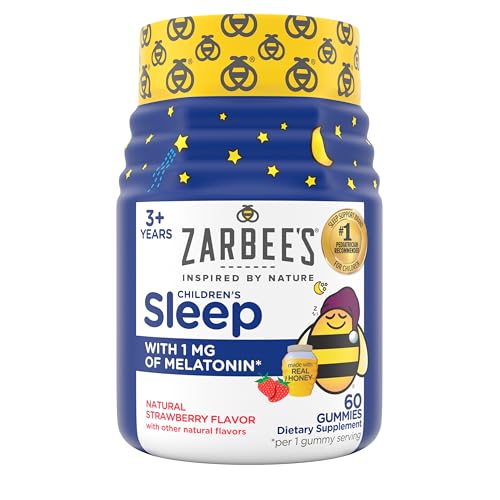
The six things that round out a melatonin routine: the standard fast-dissolve, a sub-milligram option, a time-release tablet for staying asleep, a magnesium for melatonin-free nights, a bedtime tea, and a kids bottle. Prices are approximate at time of writing.


The master clock, and how it knows it is night
Every cell in the body keeps a rough 24-hour rhythm, but the conductor is a cluster of roughly 20,000 neurons in the hypothalamus called the suprachiasmatic nucleus, or SCN. The SCN sits directly above the point where the optic nerves cross, and that location is not an accident: a special class of light-sensing cells in the retina, separate from the rods and cones that handle vision, report ambient brightness straight to it. Bright light in the morning tells the SCN the day has begun; falling light in the evening tells it the day is ending. The SCN then coordinates hormones, body temperature, and alertness across the day, and one of its evening instructions goes to the pineal gland: start releasing melatonin.
Under normal conditions the body's melatonin begins to rise an hour or two before habitual bedtime, a moment sleep researchers call dim-light melatonin onset, climbs to a peak in the middle of the night, and falls back toward morning. The amounts involved are small, measured in picograms per milliliter of blood, which is one reason low-dose supplements exist at 300 to 500 micrograms: they are closer to what the body itself produces than a 10 mg tablet is. The what is melatonin page covers where the molecule comes from; this page is about what it does once it is in the blood.
Two receptors, two jobs
Melatonin acts by binding to receptors on the surface of cells, and the two that matter for sleep are MT1 and MT2. Both are found in high density in the SCN itself, which is how the hormone talks back to the clock that ordered it. The published literature associates the two with different jobs. MT1 activation is linked to dampening the SCN's daytime alerting signal, which is the part people experience as drowsiness. MT2 activation is linked to shifting the phase of the clock, nudging the whole cycle earlier or later. That second job is why melatonin comes up in every discussion of jet lag and shift work: a signal delivered at the right time can move the clock, not just quiet it.
Because the receptors are the mechanism, more molecule does not mean more effect once the receptors are occupied. This is the pharmacological reason clinicians and researchers so often say that more is not better. Amounts well above what the body produces do not bind more strongly; they stay in the blood longer and are associated with the next-day grogginess owners report at 10 mg and above. Many sleep clinicians favor the lowest effective amount, commonly cited as 0.5 to 3 mg, and we report that as general guidance rather than a prescription. The how much melatonin page covers what the labels direct at each amount.
What a supplement adds, and what it does not
A supplement does not switch the pineal gland on. It adds a labeled amount of the same molecule from outside, on your schedule. Taken from an immediate-release form, melatonin is absorbed through the gut (or, for fast-dissolve tablets and liquids, partly through the lining of the mouth), reaches peak blood concentration within roughly an hour, and is cleared by the liver with a commonly cited elimination half-life of under an hour. That short window is why the labels on products like Natrol Melatonin 3 mg Fast Dissolve, at $7.32 for 90 tablets (verified via the Amazon Creators API on September 5, 2026), direct use about 20 minutes before bedtime: the signal is meant to land as you lie down, not an hour after.
What a supplement does not do is override light. Bright overhead lighting and a phone screen at close range in the hour before bed suppress the body's own release and counter the signal the supplement is trying to send. Every sleep-hygiene guide says to dim the lights, and the mechanism is the reason: the retina reports brightness to the SCN regardless of what you swallowed. It also does not build a reserve. Melatonin is not stored like a fat-soluble vitamin, and taking it in the afternoon does not bank it for the night. The how long it takes to work and how long it lasts pages put numbers on the timing.
Why format changes the timing
The format decides how the labeled amount reaches the blood, which decides when the clock hears the signal and for how long. Immediate-release tablets, capsules, gummies, liquids and fast-dissolve forms deliver the amount in a single rise that peaks within about an hour and falls over the next few. Time-release and extended-release tablets are engineered to dissolve slowly so that the rise is lower and longer; the labels describe a release over several hours, and NOW Melatonin 5 mg Sustained Release, at $9.17 for 120 tablets (verified via the Amazon Creators API on September 5, 2026), states a four-hour release period on its listing. A few products, such as Life Extension Melatonin IR/XR 1.5 mg at $9.00 for 60 capsules, combine an immediate portion with an extended portion in one capsule.
The marketing that follows from this is consistent: immediate-release forms are about falling asleep, and time-release forms are marketed for staying asleep. We say marketed for, because the release profile is the maker's engineering claim and the sleep outcome is not something a label may promise. What the mechanism supports is narrower: a slower release keeps melatonin in the blood later into the night, and a signal that persists later is also the one owners most often associate with morning grogginess. The time-release vs immediate-release comparison puts the two side by side.
Why timing outranks milligrams
Because melatonin shifts the clock (the MT2 job), the hour it arrives determines the direction of the shift. Melatonin taken in the early evening, before the body's own release would have started, tends to pull the clock earlier: this is the basis for the common jet lag practice of taking it at the destination's bedtime after an eastward flight. Melatonin taken late at night or in the early morning tends to push the clock later, which is the opposite of what most people want and is one reason the labels say bedtime, not "whenever you wake up at 3 a.m." Sleep researchers describe this relationship with a phase-response curve, and the practical takeaway is the one the labels already print: take it before bed, consistently, at the same time.
The amount, by contrast, mostly changes how long the signal persists and how strong the side effects are. Published research on jet lag and on sleep onset has generally found that low amounts, often 0.5 to 3 mg, perform comparably to higher ones on the outcomes studied, while higher amounts carry more next-day complaints. That is why this site treats when to take melatonin as the first question and the milligram count as the second, and why the low-dose products from Life Extension and Pure Encapsulations get a full ranked guide of their own at best low-dose melatonin.
Where the mechanism stops and the doctor starts
Everything above is general knowledge about a hormone, not a statement about what a supplement will do for you. The published effect sizes are modest on average, individual responses vary widely, and the clock-shifting property that makes melatonin useful for a traveler is also why it can interact with a routine in ways that are hard to predict. Melatonin can interact with blood thinners, immunosuppressants, blood-pressure medication and diabetes medication; a pharmacist can check your list. It is not something to drive after taking. Children, pregnant and nursing people, and older adults each have a dedicated caution on this site, and in every case a doctor, pediatrician or pharmacist decides.
Melatonin is a dietary supplement in the United States. These statements have not been evaluated by the Food and Drug Administration, and no product on this site is intended to diagnose, treat, cure, or prevent any disease. If the mechanism above makes you want to try it, the ranked guides start at best melatonin supplements, and the cautions are collected on melatonin side effects.
Ready to buy? Start with our top picks
Whatever this guide steered you toward, here's where most readers land, ranked on verified label facts and value. Live price check on each.
As an Amazon Associate we earn from qualifying purchases, at no cost to you.
Key terms
- Suprachiasmatic nucleus (SCN)
- The body's master clock, a cluster of neurons in the hypothalamus that receives light information from the retina and coordinates the 24-hour rhythm, including the pineal gland's melatonin release.
- MT1 and MT2 receptors
- The two cell-surface receptors melatonin binds to. MT1 is associated with dampening the clock's daytime alerting signal; MT2 with shifting the clock's timing earlier or later.
- Dim-light melatonin onset
- The point in the evening, typically an hour or two before habitual bedtime, when the body's own melatonin begins to rise. Researchers use it as the marker of where a person's clock is set.
- Phase shift
- A move of the whole sleep-wake cycle earlier (a phase advance) or later (a phase delay). Melatonin taken in the early evening is associated with an advance; taken late at night, with a delay.
- Half-life
- The time for the blood concentration of a substance to fall by half. For immediate-release melatonin the commonly cited figure is under an hour, which is why the signal from a single serving is short.
Questions, answered
Does melatonin make you fall asleep?
Not the way a sedative does. It signals the body's clock that night has begun, which many people experience as gentle drowsiness, and labels phrase the purpose as supporting occasional sleeplessness. Published research describes modest average effects on how long it takes to fall asleep. Whether it belongs in your routine, and whether the effect is worth it for you, is a question for a doctor or pharmacist.
Why does light matter if I am taking a supplement?
Because the eyes report brightness directly to the master clock, and light suppresses the body's own melatonin release regardless of what you swallowed. A supplement adds a night signal; a bright screen sends a day signal at the same time. Dimming lights in the hour before bed lets the two signals agree instead of compete.
Does more melatonin work better?
The mechanism says no. Melatonin acts through a fixed number of receptors, and amounts above what those receptors can use stay in the blood longer rather than binding harder. Many sleep clinicians favor the lowest effective amount, commonly cited as 0.5 to 3 mg, and higher amounts are associated with next-day grogginess. That is general guidance; a doctor or pharmacist decides what is appropriate for you.
What is the difference between how fast-dissolve and time-release work?
Fast-dissolve and other immediate-release forms deliver the labeled amount in one rise that peaks within about an hour and clears over the next few. Time-release tablets are engineered to dissolve slowly, so the rise is lower and longer; labels describe a release over several hours. Immediate-release is about falling asleep; time-release is marketed for staying asleep. The release profile is the maker's engineering claim, not a promised sleep outcome.
Can melatonin shift my body clock?
The published literature associates the MT2 receptor with shifting the clock's timing, and the direction depends on the hour. Taken in the early evening, melatonin is associated with pulling the clock earlier, which is the basis of common jet lag practice after eastward travel. Taken late at night, it is associated with pushing the clock later. This is why labels direct bedtime use and why travel-health guidance is about which day and hour, not milligrams.
Does the body stop making its own melatonin if I take a supplement?
There is no established evidence that short-term supplement use shuts down the pineal gland's own production, and melatonin is not known to be habit-forming the way sedative drugs are. Long-term safety data are limited, however, and "not known" describes the state of the evidence rather than a guarantee. A doctor decides whether nightly use is appropriate.
Why do labels say to take it 20 to 30 minutes before bed?
Because immediate-release melatonin reaches peak blood concentration within roughly an hour and has a short half-life, so a serving taken about half an hour before lying down lands its signal at the moment you want it. That is how fast-dissolve and liquid labels phrase the directions. Time-release labels differ because the release is spread over hours; follow the label of the specific product.
Filed under Explainer
Part of Melatonin 101
Keep reading
What Is Melatonin?
The hormone, the supplement, the FDA status, and how to read the label.
How Long Does Melatonin Take to Work?
Onset by format, from fast-dissolve to time-release, as the labels direct.
When to Take Melatonin
Why the hour matters more than the milligrams, and what the labels say.
Time-Release vs. Immediate-Release Melatonin
The two release profiles side by side, with the same spec table on both.