Our Pick: Natrol
Check price on Amazon →Is Melatonin Safe for Kids? What the AAP Says, and What Parents Should Know
The American Academy of Pediatrics' position is the answer: talk to a pediatrician before giving a child melatonin, use the lowest amount, treat it as a short-term aid alongside a bedtime routine rather than a nightly fixture, and keep it out of reach like any medication. This page lays out that guidance, the poison-control numbers behind the storage rule (the CDC reported a 530 percent rise in pediatric melatonin ingestion calls from 2012 to 2021), what the kids labels in our catalog actually state, what is and is not known about melatonin in children, and what a pediatrician typically asks. No medical advice; a pediatrician decides.
By The Family & Pets Desk2026-09-05~11 min read Ranked on verified label facts, never box claimsHow we research
Whether melatonin is safe for your child is a question for your child's pediatrician, and that is not a hedge; it is the position of the American Academy of Pediatrics. The AAP advises parents to talk to a pediatrician before giving melatonin, to use the lowest amount if a pediatrician agrees it is appropriate, to treat it as a short-term aid alongside a consistent bedtime routine rather than a nightly habit, and to store it out of sight and reach the way any medication is stored. Melatonin is a dietary supplement in the United States, the FDA has not evaluated the statements on any kids label, and no kids product is approved to treat any condition. The labels themselves say to consult a healthcare professional before use in children, and this page says it on every section.
The reason the storage rule gets equal billing with the pediatrician rule is a number. The CDC reported in June 2022 that calls to US poison control centers about children ingesting melatonin rose 530 percent between 2012 and 2021, to more than 260,000 reports over the decade, with the large majority unintentional, most involving children five and under, and a rise in hospitalizations along with it. Gummies that look and taste like candy, sold in jars that are not required to be child-resistant, are the mechanism. A separate 2024 CDC report counted roughly 11,000 emergency department visits over four years for unsupervised melatonin ingestions by infants and young children, with gummies the most common form involved. Every kids product on this site is described with that context, and every one belongs in a cabinet.
What follows is the AAP guidance in plain English, what is and is not known about melatonin in children, what the kids labels state about amounts and ages, the storage routine, and the questions a pediatrician will ask so you can arrive with answers. A pediatrician decides whether melatonin is appropriate for a particular child and at what amount. This page explains the shelf.
The short version
- The AAP: talk to a pediatrician first, use the lowest amount, short-term alongside a bedtime routine, and store it like medication.
- CDC, 2022: pediatric melatonin ingestion calls to poison control rose 530 percent from 2012 to 2021, mostly unintentional, mostly children five and under, mostly gummies.
- Kids labels in our catalog state 0.5 mg or 1 mg per serving and print an age range; a few low-dose products go to 0.25 and 0.3 mg. A pediatrician decides whether and how much.
- Long-term safety data in children are limited; the published studies are mostly short and in specific populations under medical supervision.
- Behavioral bedtime routines are what pediatricians reach for first. Melatonin, if used, supports a routine; it does not replace one.
Our top-rated melatonin
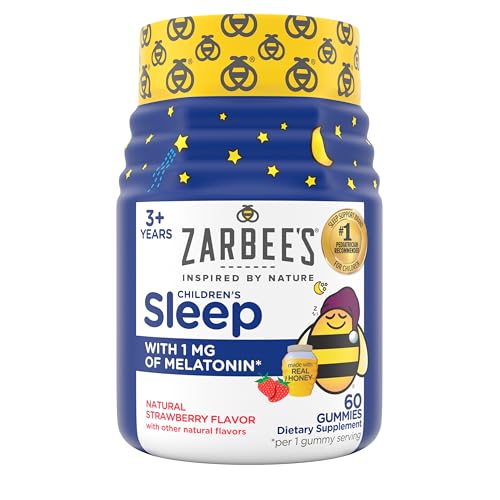
Whatever you decide, these are the picks we recommend across every format, ranked on verified label facts and cost per night. Live price check on each.


As an Amazon Associate we earn from qualifying purchases, at no cost to you.
The bedtime kit
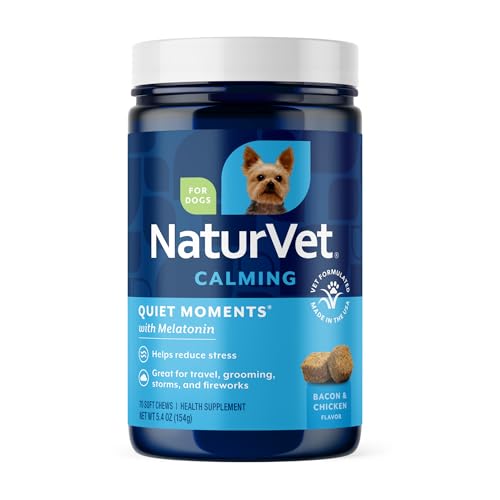
The six things a parent or pet owner actually reaches for: the lowest-dose gummies and chewables, a melatonin-free option, and the calming chews vets are asked about most. Ask a pediatrician or veterinarian first. Prices are approximate at time of writing.



What the American Academy of Pediatrics actually says
The AAP's guidance to parents, published through its HealthyChildren.org resource and reflected in its clinical messaging, has four parts. Ask first. Talk to your child's pediatrician before giving melatonin, because sleep trouble in a child can have causes that melatonin would hide, and because a pediatrician can weigh the child's age, health and any medications. Lowest amount, if at all. If a pediatrician agrees melatonin is appropriate, use the lowest amount that helps; the AAP notes that many children respond to small amounts and that more is not better. Short-term, alongside a routine. The AAP frames melatonin as a temporary aid while a consistent bedtime routine, a screen-free wind-down, and a fixed sleep schedule do the lasting work; it is not intended as a nightly fixture. Store it like medicine. Out of sight and reach, in child-resistant packaging where available, because unintentional ingestions have risen sharply.
What the AAP does not do is name an age below which melatonin is never used or an amount that is always right, and neither does this site. Kids labels in our catalog print their own age ranges and amounts, and those are reported below as the labels state them. The what is melatonin page covers why a supplement label's directions are the maker's and not a regulator's; the pediatrician is the person who turns a label into a decision for your child.
What is known about melatonin in children, and what is not
The published research on melatonin in children is real but narrow. Most of it involves children with specific neurodevelopmental conditions, studied under medical supervision, often at amounts and for durations a pediatrician chose; those studies have generally described melatonin as tolerated in the short term with the same side effects reported in adults: drowsiness, headache, dizziness, nausea, and in some children irritability or vivid dreams. What the research has not done is follow large numbers of otherwise healthy children taking over-the-counter melatonin gummies for months or years and report on long-term outcomes. Because melatonin is a hormone, and because childhood is a period of hormonal development, the question of long-term effects on puberty and growth has been raised in the literature and has not been settled either way. That is the honest state of the evidence, and it is the reason the AAP's guidance is as cautious as it is.
Two more facts belong in a parent's picture. First, the label-versus-content problem: a 2017 analysis published in the Journal of Clinical Sleep Medicine found melatonin content in supplements ranging from 83 percent below the labeled amount to 478 percent above it, and a 2023 analysis of melatonin gummies specifically found similar variance. A child given what a parent believes is 1 mg may be receiving several times that. A third-party verification mark (USP, NSF or equivalent) on a listing is the signal that an outside lab checked the content, and it matters more for a child than for anyone. Second, the pediatric side-effect profile includes what parents describe most: morning grogginess and, in some children, bedwetting or vivid dreams. The melatonin side effects page covers the full list.
What the kids labels in our catalog state
Every row below is a product sold for children from a Tier A maker, with the amount per serving and the age as the label or listing states them. It is a description of the shelf, not a recommendation for any child; a pediatrician decides whether melatonin is appropriate and at what amount. Prices are the live Amazon price verified via the Amazon Creators API on September 5, 2026 and are hedged.
| Product | Amount per serving | Format | Age on label | Other actives (as listed) | Price |
|---|---|---|---|---|---|
| OLLY Kids Sleep | 0.5 mg | Gummy, raspberry | Kids (label states the range) | L-theanine | $12.88 for 50 |
| SmartyPants Kids Sleep | 0.5 mg | Gummy | Kids (label states the range) | Chamomile, vitamin D3 | $14.84 |
| Zarbee's Kids Melatonin Sleep Gummies | 1 mg | Gummy | Kids (label states the range) | Not published in title | $14.98 for 60 |
| Zarbee's Kids Melatonin Chewable Tablets | 1 mg | Chewable tablet | Kids (label states the range) | Not published in title | $7.98 for 30 |
| Zarbee's Kids Melatonin Liquid | 1 mg | Liquid, 1 fl oz | Kids (label states the range) | Not published in title | $8.68 |
| Natrol Kids Melatonin Gummies | 1 mg | Gummy, raspberry | Kids (label states the range) | Not published in title | $8.96 for 60 |
| Natrol Kids Fast Dissolve Melatonin | 1 mg | Fast-dissolve tablet, strawberry | Kids (label states the range) | Not published in title | $9.89 for 40 |
| Vicks Pure Zzzs Kidz | Not published in title | Gummy | Kids (label states the range) | Not published in title | $13.47 |
| Hyland's Kids Melatonin Sleep + Immune | Not published in title | Liquid, sugar-free, 4 oz | Ages 2+ (stated in title) | Not published in title | $6.69 |
Two patterns are worth pointing out. The kids amounts, 0.5 and 1 mg, are a tenth to a twentieth of the adult maximum-strength products, which is the shelf's own version of the AAP's lowest-amount guidance. And a liquid or a fast-dissolve tablet can be measured or split smaller than a gummy can, which is why pediatricians who do agree to melatonin often point toward those formats. The ranked kids guides, best melatonin for kids and best liquid melatonin for kids, carry the safety rules on every card; the dosage chart puts the kids rows beside the adult ones.
The storage rule, and the numbers behind it
The CDC's June 2022 Morbidity and Mortality Weekly Report is the document behind every storage warning on this site, and its findings are worth stating plainly. Pediatric melatonin ingestions reported to US poison control centers rose 530 percent from 2012 to 2021. The decade's total exceeded 260,000 reports. The large majority were unintentional, most involved children five and under, and most occurred at home. Most children had no or mild symptoms, but the report documented a rise in hospitalizations and intensive-care admissions, and a small number of deaths in which melatonin was involved. A 2024 CDC report added roughly 11,000 emergency department visits over four years for unsupervised melatonin ingestions by infants and young children, with gummies the most common form.
The mechanism is packaging, not chemistry. Adult gummies at 5 or 10 mg per serving deliver, in a handful, an amount no pediatrician would direct, and they are sold in jars that dietary-supplement rules do not require to be child-resistant. The storage routine below is the AAP's guidance turned into steps. It applies to the adult gummies in the house at least as much as to the kids product, because the adult jar is the one with more melatonin per piece. If a child does get into melatonin, US Poison Control is at 1-800-222-1222, free and staffed around the clock; the can you overdose on melatonin page covers what to do and what to tell them.
What a pediatrician typically asks, so you can arrive with answers
Pediatricians reach for behavioral approaches first, and the questions they ask are about the routine before they are about the supplement. What time does the child go to bed and get up, on school nights and on weekends? What does the hour before bed look like: screens, light, activity, food? How long does it take the child to fall asleep, and what happens when they do not? Are there night wakings, snoring, restlessness, or daytime sleepiness that might point to something else? What medications or other supplements does the child take? Has anything changed recently at home or school? Arriving with a week of notes on those questions is more useful to a pediatrician than any product name.
If a pediatrician does agree that melatonin is appropriate, the conversation typically covers the amount (the lowest that helps), the timing (the label's lead time before a consistent bedtime), the duration (short-term, with a plan to reassess), the format (liquids and fast-dissolve tablets can be measured smaller than gummies), and the storage. It may also cover the label-versus-content problem and the value of a verified product. Those are the right questions, and they are the pediatrician's to answer for your child. The melatonin-free sleep aids for kids guide covers the products parents ask about when a pediatrician says not yet.
Teens, and the cautions that apply to every age
Teenagers are a separate conversation for two reasons: their body clocks are commonly described as shifting later during adolescence, which makes early school start times a physiological problem rather than a discipline one, and they are more likely to self-administer an adult product at an adult amount. The AAP's guidance applies to them exactly as it does to younger children: pediatrician first, lowest amount, short-term alongside a schedule and light routine that respects the later clock. The melatonin for teens page covers the adolescent clock and what the labels say.
For every age: a pediatrician decides whether melatonin is appropriate and at what amount. Melatonin can interact with medications, including some a child may take for other conditions, and a pharmacist can check the list. Some sugar-free gummies use sugar alcohols, and xylitol in particular is toxic to dogs, so a jar within a dog's reach is a second emergency waiting to happen. Melatonin is a dietary supplement; these statements have not been evaluated by the Food and Drug Administration, and no product on this site is intended to diagnose, treat, cure, or prevent any disease. Poison Control: 1-800-222-1222.
How to store melatonin in a home with children, per AAP guidance
- 1
Treat every melatonin product as medication
Adult gummies, kids gummies, tablets, liquids: all of them. The adult jar has more melatonin per piece than the kids one, and it is the one most often within reach on a nightstand.
- 2
Move it out of sight and out of reach
A high cabinet with a latch, or a locked box. Not a nightstand, not a kitchen counter, not a bathroom shelf a child can climb to. Out of sight matters as much as out of reach; a child who has not seen the jar does not go looking for it.
- 3
Prefer child-resistant packaging
Dietary-supplement rules do not require it, so it is a buying criterion. Where a kids product offers a child-resistant cap, that is a point in its favor. Keep the original container so the label is with the product.
- 4
Never call it candy, and never take it in front of a child as if it were
Children imitate. A gummy taken from a jar at bedtime while a child watches is a gummy the child will look for.
- 5
Give it only as the pediatrician directed, and count what is left
One labeled serving, measured, at the lead time the pediatrician and label agree on. Knowing how many are in the jar is what lets you tell Poison Control how many are missing.
- 6
Keep 1-800-222-1222 where you can find it
US Poison Control, free, 24 hours. Any child ingestion is a call, even if the child seems fine. Have the container in hand.
Ready to buy? Start with our top picks
Whatever this guide steered you toward, here's where most readers land, ranked on verified label facts and value. Live price check on each.
As an Amazon Associate we earn from qualifying purchases, at no cost to you.
Key terms
- AAP (American Academy of Pediatrics)
- The professional body whose guidance anchors every kids page on this site: pediatrician first, lowest amount, short-term with a routine, stored like medication.
- Unintentional pediatric ingestion
- A child taking melatonin they were not given, usually gummies found within reach. The category behind the CDC's 530 percent rise in poison-control reports from 2012 to 2021.
- Lowest amount
- The AAP's guidance if a pediatrician agrees melatonin is appropriate. Kids labels in our catalog state 0.5 and 1 mg per serving; a few low-dose products go to 0.25 and 0.3 mg.
- Bedtime routine
- The consistent, screen-free wind-down and fixed schedule pediatricians reach for first. Melatonin, if used, is framed by the AAP as a short-term aid alongside it, not a substitute.
- Child-resistant packaging
- A closure designed to slow a young child's access. Not required on dietary supplements, which is why it is a buying criterion rather than a given.
- Third-party verification
- A USP, NSF or equivalent mark stating an outside lab checked the content. Published analyses have found wide gaps between labeled and actual melatonin, including in gummies.
Questions, answered
Is melatonin safe for kids?
That is a pediatrician's decision, and the American Academy of Pediatrics says so: talk to a pediatrician before giving melatonin, use the lowest amount if a pediatrician agrees, treat it as a short-term aid alongside a bedtime routine, and store it like medication. Short-term studies in children under medical supervision have described it as tolerated with the same side effects seen in adults; long-term data in healthy children are limited.
At what age can a child take melatonin?
Neither the AAP nor this site names an age. Kids labels print their own age ranges, and a pediatrician decides for a particular child. Products in our catalog state ranges on the label; one liquid states ages 2 and up in its title. The younger the child, the more firmly the guidance points to a pediatrician's conversation and a behavioral routine first.
How much melatonin can a child have?
A pediatrician decides. The AAP's guidance is the lowest amount that helps, and kids labels in our catalog state 0.5 mg or 1 mg per serving, with a few low-dose products at 0.25 and 0.3 mg. Those are what is sold, not a recommendation. Liquids and fast-dissolve tablets can be measured smaller than gummies, which is one reason pediatricians who agree to melatonin often point toward them.
Can kids take melatonin every night?
The AAP frames melatonin as a short-term aid alongside a bedtime routine, not a nightly fixture, and nightly use in a child is a pediatrician's decision with a plan to reassess. Long-term safety data in children are limited, and because melatonin is a hormone, questions about long-term effects on development have been raised in the literature and not settled either way.
What are the side effects of melatonin in children?
The same ones reported in adults: drowsiness, headache, dizziness, nausea, and in some children irritability or vivid dreams. Parents most often describe morning grogginess, and some describe bedwetting. Any reaction in a child is a reason to stop and call the pediatrician; any unintentional ingestion is a Poison Control call at 1-800-222-1222.
What should I do if my child ate melatonin gummies?
Call Poison Control at 1-800-222-1222 immediately, with the container in hand, even if the child seems fine. Do not induce vomiting. Be ready with the child's age and weight, the melatonin per gummy from the Supplement Facts panel, any other ingredients, and how many are missing. Then move every melatonin product in the house out of sight and reach.
Are melatonin gummies safe for kids?
Kids gummies from established makers are labeled at 0.5 or 1 mg and a pediatrician decides whether they are appropriate. The safety concern specific to gummies is not the ingredient but the form: they look like candy, are sold in jars not required to be child-resistant, and are the most common form in pediatric poison-control reports. Stored like medication and given only as directed, that risk is managed; left on a nightstand, it is not.
What do pediatricians recommend instead of melatonin?
A consistent bedtime routine and schedule, a screen-free hour before bed, dim light in the evening and bright light in the morning, and a look at what might be driving the sleep trouble. Melatonin-free bedtime products exist and are covered on this site, and a pediatrician can say whether any of them fits. The routine is what pediatricians reach for first because it is what does the lasting work.
Filed under Explainer
Part of Melatonin 101
Keep reading
Best Melatonin for Kids (2026)
The kids lines ranked on label facts, with the AAP rules on every card.
Melatonin for Kids Safety Guide
The full safety protocol for a household: storage, amounts, and when to call.
Can You Overdose on Melatonin?
What too much looks like, and what to tell Poison Control.
Best Melatonin-Free Sleep Aids for Kids (2026)
What parents ask about when a pediatrician says not yet.