Our Pick: Natrol
Check price on Amazon →Melatonin for Teens: What Parents and Teenagers Should Know Before the First Gummy
A pediatrician decides whether melatonin is appropriate for a teenager and at what amount; that is the American Academy of Pediatrics' position for every age under 18, and it is the answer on this page. What makes teenagers a separate conversation is everything around that decision: body clocks that are commonly described as shifting later in adolescence, school start times that ignore it, an adult gummy jar in the bathroom, a driver's license, and a teenager's own ability to buy a 10 mg product without asking anyone. This page covers what is on the shelf for this age (nothing labeled for teens; kids labels stop at 1 mg and adult labels start there), what the general guidance says about amounts, timing and screens, the driving rule, and when melatonin is the wrong answer to a teenager's sleep.
By The Family & Pets Desk2026-09-05~10 min read Ranked on verified label facts, never box claimsHow we research
Whether a teenager should take melatonin is a pediatrician's decision, and so is the amount. The American Academy of Pediatrics' guidance does not stop at age twelve: talk to a pediatrician first, use the lowest amount if a pediatrician agrees, treat melatonin as a short-term aid alongside a consistent sleep schedule rather than a nightly fixture, and store it like medication. The difference with teenagers is that they can open the cabinet, read the label, and buy their own jar, so the conversation has to include them. Melatonin is a dietary supplement in the United States, the FDA has not evaluated the statements on any label, and no product in our catalog is labeled for teens specifically.
Two facts shape this page. First, adolescent body clocks are commonly described in sleep research as shifting later, so that a sixteen-year-old who cannot fall asleep before midnight and cannot wake for a 7 a.m. bell is fighting biology rather than showing a lack of discipline; that is the reason the AAP has for years recommended later school start times for adolescents. Second, teenagers are the age group most likely to self-administer an adult melatonin product at an adult amount, which means the 10 mg gummies in a parent's cabinet are more of a risk for a fifteen-year-old than for a five-year-old, in a different way: not unintentional ingestion, but intentional use at a high amount with no one deciding whether it is appropriate.
What follows is what the shelf offers for this age, what the general guidance says about amounts and timing, the two rules that matter most for teenagers (the phone and the car), what to do about the jar in the bedroom, and when melatonin is not the answer. Where a product is named, it is a verified Amazon listing from a recognized maker with the amount as the title states it and the price verified via the Amazon Creators API on September 5, 2026. We are a verification desk, not pediatricians; nothing here is medical advice.
The short version
- A pediatrician decides whether and how much, for a teenager as for a younger child. The teenager should be in the room.
- Adolescent body clocks are commonly described as shifting later; the AAP has recommended later school start times for that reason. A teenager's late nights are often biology, not defiance.
- There is no product labeled for teens. Kids products in our catalog state 0.5 to 1 mg; adult products start at 1 mg. A pediatrician who agrees to melatonin typically names a low amount and the label it comes on.
- The two teenage rules: the phone leaves the bedroom an hour before bed, and nobody drives after taking melatonin. A newly licensed driver taking a 10 mg gummy at 10 p.m. and driving to school at 7 a.m. is the scenario to prevent.
- The adult jar in the house is the teenager's most likely source. Talk about it, and move it.
Our top-rated melatonin
Whatever you decide, these are the picks we recommend across every format, ranked on verified label facts and cost per night. Live price check on each.


As an Amazon Associate we earn from qualifying purchases, at no cost to you.
The bedtime kit
The six things a parent or pet owner actually reaches for: the lowest-dose gummies and chewables, a melatonin-free option, and the calming chews vets are asked about most. Ask a pediatrician or veterinarian first. Prices are approximate at time of writing.




Why teenagers are a separate conversation
Sleep research commonly describes a shift in the timing of adolescents' body clocks: the internal signal to feel sleepy arrives later in the evening than it did in childhood, and the signal to wake arrives later in the morning. The practical result is a teenager who genuinely cannot fall asleep at 10 p.m. and genuinely cannot function at 7 a.m., paired with a school schedule built for the opposite. The American Academy of Pediatrics has recommended for years that middle and high schools start no earlier than 8:30 a.m. for exactly this reason. None of that is a case for melatonin; it is context for why a teenager's sleep trouble is often a scheduling problem before it is a supplement problem, and why a pediatrician's first questions will be about bedtimes, wake times, screens and weekends rather than about a jar.
The second reason is access. A five-year-old who eats a handful of adult gummies is an unintentional ingestion and a Poison Control call. A fifteen-year-old who takes two 5 mg adult gummies every night because a friend does is something else: intentional, repeated use of a high amount with no one having decided whether it is appropriate, no one watching for next-day drowsiness, and no plan to stop. Teenagers can read the label, open the cabinet and buy their own jar, so the conversation about melatonin has to include them rather than happen over their heads.
What the pediatrician conversation looks like at this age
A pediatrician seeing a teenager for sleep trouble typically starts with the schedule: bedtime and wake time on school nights and weekends, how long it takes to fall asleep, what the hour before bed looks like, caffeine and energy drinks, naps, sports and homework timing, and whether the phone is in the bedroom. Weekend catch-up sleep is a specific question, because a teenager who sleeps until noon on Saturday has moved their clock two or three hours later by Monday. The pediatrician may also ask about mood, stress and screens in a way that is about more than sleep, and a teenager should be able to answer without a parent in the room for part of it.
If the pediatrician does agree that melatonin is appropriate, the conversation typically covers the same four things as for a younger child, and the kids safety guide lays them out as a checklist: the amount (the lowest that helps; many clinicians cite 0.5 to 3 mg as a general starting range for adults, and a pediatrician who agrees to melatonin for an adolescent names the amount with the same preference for the lowest that helps, reported here as general guidance and not a prescription), the timing (a pediatrician may name a lead time longer than the label's, because for a shifted clock the timing is the point), the duration (short-term, with a date to come back), and the format. A teenager old enough to swallow a tablet has more options than a younger child, which is the subject of the next section.
What the pediatrician will not do is hand a teenager a jar and leave. The AAP frames melatonin as an aid to a schedule, and a schedule for a teenager means a fixed wake time seven days a week, morning light, and the phone out of the bedroom, all of which are harder and more important than the supplement. Is melatonin safe for kids covers what is and is not known about melatonin in people under 18, including the limits of the long-term data.
What is on the shelf: no teen products, and where the labels stop
There is no melatonin product in our catalog labeled for teenagers. Kids products state 0.5 mg or 1 mg per serving and carry an age line on the panel; adult products start at 1 mg and go to 20 mg, and their labels are written for adults. A teenager sits in the gap, which is one more reason a pediatrician names both the amount and the product it comes on. What follows is what the shelf offers at the low end, reported as the listing titles state it, for the pediatrician conversation and not as a recommendation.
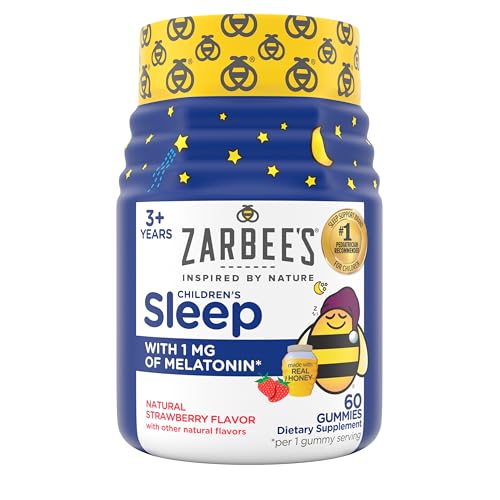
At the kids end, Zarbee's Kids Melatonin Sleep Gummies state 1 mg, 60 count, $14.98 (verified via the Amazon Creators API on September 5, 2026), and OLLY Kids Sleep states 0.5 mg with L-theanine, 50 count, $12.88; their panels state the ages they are directed for. At the low end of the adult shelf, Natrol Melatonin 1 mg Fast Dissolve states 1 mg, strawberry, 90 tablets, $6.97; Nature's Bounty Melatonin 1 mg states 1 mg, 180 tablets, $4.09; and Life Extension Melatonin 300 mcg states 300 mcg, 100 capsules, $7.50, the lowest labeled amount from a Tier A brand. Those adult labels are written for adults, and a pediatrician who points a teenager at one is making a decision the label did not make. We report the shelf; the pediatrician decides.
Timing, the phone, and the weekend
For a teenager whose clock has shifted late, the timing of a melatonin serving is, in the pediatrician's framing, the point rather than a detail. Labels direct a set number of minutes before bedtime; a pediatrician working with a shifted clock may direct a different lead time, and where they differ the pediatrician wins. What the serving cannot do is move a clock on its own. The three things that do the moving are the ones every sleep clinician names: a fixed wake time seven days a week, including Saturday, because the wake time anchors the clock more than the bedtime does; morning light, outdoors if possible, within an hour of waking; and the phone out of the bedroom for the last hour before bed, because screen light in the evening is the signal a shifted clock least needs.
The phone rule is the one teenagers fight and the one that matters most. A serving of melatonin at 9:30 p.m. followed by ninety minutes of a bright screen at close range is a serving working against its own purpose. The practical version most families land on: the phone charges in the kitchen from a set time, the alarm is a separate clock, and the rule applies to parents' phones too, which is the part that makes it stick. When to take melatonin covers the timing question for adults; for a teenager, the pediatrician's lead time and the phone rule are the two numbers that matter.
The weekend is where schedules die. Two late nights and two noon wake-ups move a teenager's clock hours later by Monday, and the serving on Sunday night cannot undo it. A pediatrician will typically ask for the weekend wake time to be within an hour or so of the school-day one; that is a harder ask than the supplement and a more effective one. Caffeine and energy drinks after early afternoon undo the same work from the other direction.
Driving, school and sports: the rules that are different at this age
Nobody drives after taking melatonin. That is the standard caution on every adult label and every page on this site, and it has a specific teenage shape: a newly licensed driver who takes a serving at 10 p.m. and drives to school at 7 a.m. Next-day drowsiness is the most consistently reported side effect of melatonin at higher amounts, and a seventeen-year-old on a 10 mg gummy is the person most likely to feel it behind the wheel in the morning. If a pediatrician agrees to melatonin for a teenager who drives, the amount, the timing and the morning are all part of that conversation, and a teenager who feels groggy in the morning does not drive, full stop. Melatonin hangover and grogginess covers the morning-after in detail.
School and sports carry the same concern in a milder form. A teenager who is drowsy in first period has traded one problem for another; a teenager with a 6 a.m. practice who took a serving at 11 p.m. is in the same position as the driver. The pediatrician's lead time and the general preference for lower amounts are the answers, and a teenager who notices grogginess should say so rather than push through it. Alcohol, which some teenagers will encounter, compounds drowsiness with any sleep supplement; melatonin and alcohol is written for adults, and the honest version for a teenager is simply not to combine them.
The jar in the bedroom, and the jar in the bathroom
For younger children the storage rule is about reach. For teenagers it is about supply. A teenager who has decided melatonin helps will keep a jar in their room, take it nightly, and go up in amount when it stops seeming to work, which is the exact opposite of the AAP's short-term, lowest-amount framing and happens without anyone deciding anything. The adult jar in the bathroom cabinet is the most likely source, because it is there, it is the parents', and it is 5 or 10 mg per piece. The most useful thing a parent can do is move that jar, and say why, out loud, to the teenager.
The conversation is easier than it sounds when it is about facts rather than rules. The facts: the amounts on adult gummies are far above what pediatricians typically name for adolescents; published analyses have found melatonin content in supplements varying widely from the label, including in gummies; more is not better and the morning after is real; and a teenager whose sleep is bad enough to want a nightly supplement is a teenager who should see a pediatrician, which is a sentence most teenagers will accept when it is not a punishment. Younger siblings in the house make the storage rule literal again: a teenager's jar on a desk is a five-year-old's jar within reach, and the kids safety guide has the cabinet routine. Poison Control is 1-800-222-1222 for any unplanned ingestion by a child of any age.
Sharing at school deserves its own sentence: a gummy handed to a friend is a supplement given to someone whose medications, conditions and pediatrician are unknown. Melatonin can interact with medications, including some prescribed for conditions common in adolescence, and a teenager is not in a position to check. The answer to a friend who asks is a pediatrician, not a gummy.
When melatonin is not the answer
A teenager who cannot fall asleep, cannot wake up, and is exhausted all day may have a shifted clock that a schedule and morning light will move over a few weeks, with or without a serving of melatonin. Or they may have something a supplement will hide: anxiety, low mood, a phone in the bed until 2 a.m., an energy drink at 4 p.m., a sports schedule that ends at 9:30, a job, a sleep disorder, or pain. Melatonin taken nightly by a teenager for months, at rising amounts, is not a treatment for any of those; it is a way of not finding out. That is the strongest reason the AAP's guidance says pediatrician first, and the reason this page has said it in every section.
The signs that the pediatrician conversation should happen now rather than after another jar: sleep trouble that has lasted more than a few weeks; daytime sleepiness affecting school, driving or sports; a teenager who is already taking an adult product nightly; snoring, gasping or waking unrefreshed after a full night, which are questions about breathing rather than about melatonin; and any change in mood that came with the sleep change. A pediatrician can sort those in one visit. A jar cannot. For the general picture of what melatonin is and is not, what is melatonin is the place to start, and can you take melatonin every night addresses the nightly-habit question for adults in terms a teenager can read.
Ready to buy? Start with our top picks
Whatever this guide steered you toward, here's where most readers land, ranked on verified label facts and value. Live price check on each.
As an Amazon Associate we earn from qualifying purchases, at no cost to you.
Key terms
- Delayed sleep timing in adolescence
- The later shift in the timing of teenagers' body clocks commonly described in sleep research: later sleepiness in the evening, later waking in the morning. The reason the AAP recommends later school start times and the reason a teenager's late nights are often biology.
- Anchor wake time
- A fixed wake time seven days a week, including weekends. Sleep clinicians describe the wake time, not the bedtime, as the anchor that holds a clock in place; weekend noon wake-ups move it hours later by Monday.
- Lead time
- The number of minutes before bedtime a serving is directed. Labels state one; a pediatrician working with a shifted clock may name a different one, and the pediatrician's number supersedes the label's.
- Adult amount
- The 5 to 10 mg per serving on most adult gummies, five to twenty times the 0.5 to 1 mg on kids labels. The amount teenagers most often self-administer, and the amount most associated with next-day grogginess.
- Self-administration
- A teenager taking melatonin they chose and measured themselves, usually from an adult jar in the house. Intentional and repeated, which makes it a different concern from a young child's unintentional ingestion.
Questions, answered
Is melatonin safe for teenagers?
That is a pediatrician's decision, and the American Academy of Pediatrics' guidance applies to every age under 18: talk to a pediatrician first, use the lowest amount if a pediatrician agrees, treat it as a short-term aid alongside a consistent sleep schedule, and store it like medication. Short-term studies in adolescents under medical supervision have described it as tolerated; long-term data in teenagers are limited. Nothing on this page is medical advice.
How much melatonin can a teenager take?
A pediatrician decides and names the amount. The general guidance many clinicians cite for adults is a starting range of 0.5 to 3 mg with the lowest amount that helps favored, and a pediatrician who agrees to melatonin for an adolescent names the amount, typically with the same preference for the lowest that helps; that is general guidance, not a prescription for any teenager. The 5 and 10 mg adult gummies most teenagers reach for on their own are five to twenty times a kids serving.
Is there a melatonin made for teens?
Not in our catalog. Kids products state 0.5 or 1 mg per serving and carry an age line on the panel; adult products start at 1 mg and their labels are written for adults. A teenager sits in the gap, which is why a pediatrician who agrees to melatonin typically names both the amount and the product it comes on. The lowest labeled adult products from Tier A brands are Life Extension 300 mcg, and the 1 mg tablets from Natrol and Nature's Bounty.
Can my teenager take my adult melatonin gummies?
Not without a pediatrician saying so. Adult gummies commonly deliver 5 to 10 mg per serving, and their serving size is often two gummies, which a teenager reading the front of the jar may not know. The adult jar in the house is the most likely source of a teenager's unsupervised, nightly, rising use, and moving it, with an explanation, is the most useful thing a parent can do.
Can a teenager drive after taking melatonin?
No. Do not drive after taking melatonin is the standard caution on every adult label, and next-day drowsiness is the most consistently reported side effect at higher amounts. A newly licensed driver who takes a serving late and drives early is the scenario to prevent. A teenager who feels groggy in the morning does not drive, and should tell the pediatrician.
Why can't my teenager fall asleep before midnight?
Sleep research commonly describes adolescents' body clocks as shifting later, so that sleepiness arrives later in the evening and waking later in the morning; the AAP has recommended later school start times for that reason. Late nights are often biology rather than defiance. The tools that move a clock are a fixed wake time seven days a week, morning light, and the phone out of the bedroom; a pediatrician decides whether melatonin has a role alongside them.
Should my teenager take melatonin every night?
The AAP frames melatonin as a short-term aid alongside a schedule, not a nightly fixture, and a teenager who needs something every night to sleep has a reason to see a pediatrician rather than a reason to keep taking it. A pediatrician who agrees to melatonin will name a duration and a date to come back. Nightly use at rising amounts without that conversation is the pattern this page exists to prevent.
Filed under Explainer
Part of Kids, Teens & Pets
Keep reading
Is Melatonin Safe for Kids?
The AAP position and what is and is not known about melatonin under 18, including the teen section.
Melatonin for Kids Safety Guide
The parent checklist: label, format, timing, storage, and when to call.
Best Low-Dose Melatonin (2026)
The low end of the adult shelf, from 300 mcg to 1 mg, ranked on label facts.
Melatonin Hangover and Grogginess
The morning after, and why it matters most for a teenager with a license.